
MOE SEAB PSLE Mathematics Syllabus Tutor | Your Complete Guide to Achieving AL1
The Ultimate Guide to Conquering the PSLE Math Syllabus: Your 6-Year Roadmap to AL1
Parents love this SEAB PSLE Math resource because it answers the #1 question: “How do I actually help my child achieve AL1 in PSLE Math?”
Bookmark this page — it’s the only complete guide to PSLE Math Syllabus you’ll ever need to confidently secure AL1 for your child.
This is the most complete guide to the PSLE Math Syllabus you’ll find online — updated for the latest SEAB and MOE Primary Math Syllabus changes rolling out fully in 2026. Thousands of parents rely on this SEAB MOE PSLE Mathematics Guide because it translates the official document into an actionable 6-year roadmap.
Download the official PSLE Syllabus 2025 PDF, then come right back here — we turn every learning objective into a step-by-step plan to achieve AL1 in PSLE Math.
Imagine your child’s PSLE Math paper not as a dreaded hurdle, but as a victory lap—one where they confidently sketch bar models for tricky ratios, chase angles in geometric puzzles, and decode real-world percentages with a smile.
In Singapore’s high-stakes primary education landscape, the Ministry of Education’s 2021 Primary Mathematics Syllabus (rolling out fully by 2026) isn’t just about crunching numbers—it’s a blueprint for building logical thinkers who thrive in everyday life and beyond.
From P1’s playful counting to P6’s algebraic flair, it weaves three core strands—Number and Algebra, Measurement and Geometry, and Statistics—around “big ideas” like proportionality and equivalence, all while honing problem-solving, reasoning, and metacognition.
But here’s the secret: Mastery isn’t magic. It’s strategy. Just like scaling a startup into an empire, success hinges on three powerhouse pillars—Time (your structured timeline), Energy (your child’s inner fire), and Resources (your toolkit arsenal).
Talent and attitude? They’re the spark. Without smart systems, though, they flicker out. This guide turns them into an algorithm: A proven, phased formula drawn from Bukit Timah Tutor’s battle-tested methods and the syllabus itself.
Over six transformative years—from wide-eyed P1 wonder to resilient P6 teen—we’ll map macro visions (the full journey), yearly cycles (school-term syncs), exam crunches (SA1/SA2 prep), and daily rhythms. We’ll spotlight pitfalls, weave in energy boosts for sustained joy, and crunch realistic costs so you invest wisely.
Whether you’re a parent plotting the long game or a student eyeing that top Achievement Level 1 (AL1, 90+ marks), this is your no-fluff playbook. Let’s algorithm-ize excellence: Input effort, output confidence. Ready to launch? Dive in.
Parents searching for the PSLE Mathematics Syllabus 2025 and beyond now have a single SEAB MOE PSLE Mathematics Guide that covers every topic from Primary 1 to Primary 6.
These PSLE Math Problem-Solving Strategies have helped hundreds of students jump from AL4–AL6 to AL1 in under 18 months.
The Primary School Leaving Examination (PSLE) Mathematics paper tests your mastery of the Singapore MOE syllabus, emphasizing conceptual understanding, problem-solving, reasoning, and real-world applications. For students taking PSLE in 2025 (the cohort who started Primary 1 in 2019), Primary 6 follows the 2013 syllabus, while Primary 1–5 align with the updated 2021 framework.
If your goal is to achieve AL1 in PSLE Math, this PSLE Math Preparation Guide breaks down the exact strategies that consistently deliver 90+ marks.
PSLE Math AL1 Guide: Quick Summary (2021 Syllabus Roadmap)
The current PSLE Syllabus 2025 still follows the 2021 framework for P1–P5, while the Primary 6 Math Syllabus switches fully to the new version only from 2026.
- Core Aim: Turn 6-year primary math journey into AL1 success (90+ marks) via Time (structured plans), Energy (mindset fuel), Resources (smart tools)—like a startup algorithm for syllabus strands (Numbers/Algebra, Measurement/Geometry, Statistics) and big ideas (e.g., proportionality).
- Macro Time (6-Year Arc): P1–P2: Joyful foundations (CPA play); P3–P4: Connect concepts (interleave); P5–P6: Deep mastery (modeling/mocks). Annual audits; Energy: Build resilience; Resources: Free apps to paid tuition.
- Yearly/Termly Cycles: Term 1: New topics + energizers; Term 2–3: Depth/integration + balance; Term 4: Review + recharge. SA1: Mid-checkpoint (85%+); SA2: PSLE sim (90%+). Energy: Seasonal rituals; Resources: Rotate books/apps.
- Micro Time (Daily): Morning: Quick retrieval; After-school: Targeted practice; Evening: Reflect. 45–60 min total. Energy: Pomodoro + gratitude; Resources: Slot apps/books for flow.
- Energy Mapping: P1–P2: Fun sparks (games); P3–P4: Grit builders (mindfulness); P5–P6: Teen sustains (relevance). Daily: Affirmations/snacks; Pitfalls: Burnout fixes via journals.
- Resources Mapping: Start free (MOE PDF/Khan); Ramp to paid (tuition $200–400/mo, books $30/level). Energy tie: Gamified for joy. 6-Year Cost: $22K–42K (mid: $32K); ROI: Gap-free secondary.
- Pro Tips: Track quarterly (errors/mood); Flex for life; Mindset: “Yet” language. Full guide: Algorithm-ize talent—input strategy, output excellence!
Master the PSLE Math Syllabus Changes 2026 early — especiallyism, big ideas, and metacognition are now explicitly tested for deeper critical thinking.
From PSLE 2026 onward (2021 Primary 1 cohort), the full 2021 syllabus applies across all levels. The provided 2021 syllabus (updated December 2024) organizes content into three strands: Number and Algebra, Measurement and Geometry, and Statistics. It builds on foundational numeracy, integrating “big ideas” like Equivalence, Proportionality, and Diagrams to connect topics across levels.
The exam consists of two papers: Paper 1 (multiple-choice and short-answer, 1 hour) and Paper 2 (long-answer, 2 hours 30 minutes total with Paper 1, but often split), worth 100 marks. AL1 (Achievement Level 1) requires near-perfect scores (typically 90+ marks), demanding relational understanding (knowing why concepts work) over rote memorization, plus error-free execution under time pressure.
Key goals from the syllabus: Acquire concepts/skills for daily use; develop reasoning, communication, and metacognition via problem-solving; foster confidence and interest. The framework highlights five components—concepts (e.g., numbers, shapes), skills (e.g., calculations, data handling), processes (e.g., modeling, abstracting), metacognition (self-monitoring strategies), and attitudes (perseverance, appreciation). Big ideas cluster into themes like Properties/Relationships and Representations/Communications, appearing across strands for coherence.
Our students use proven PSLE AL1 tips built directly on the official SEAB PSLE Math exam format and marking scheme.
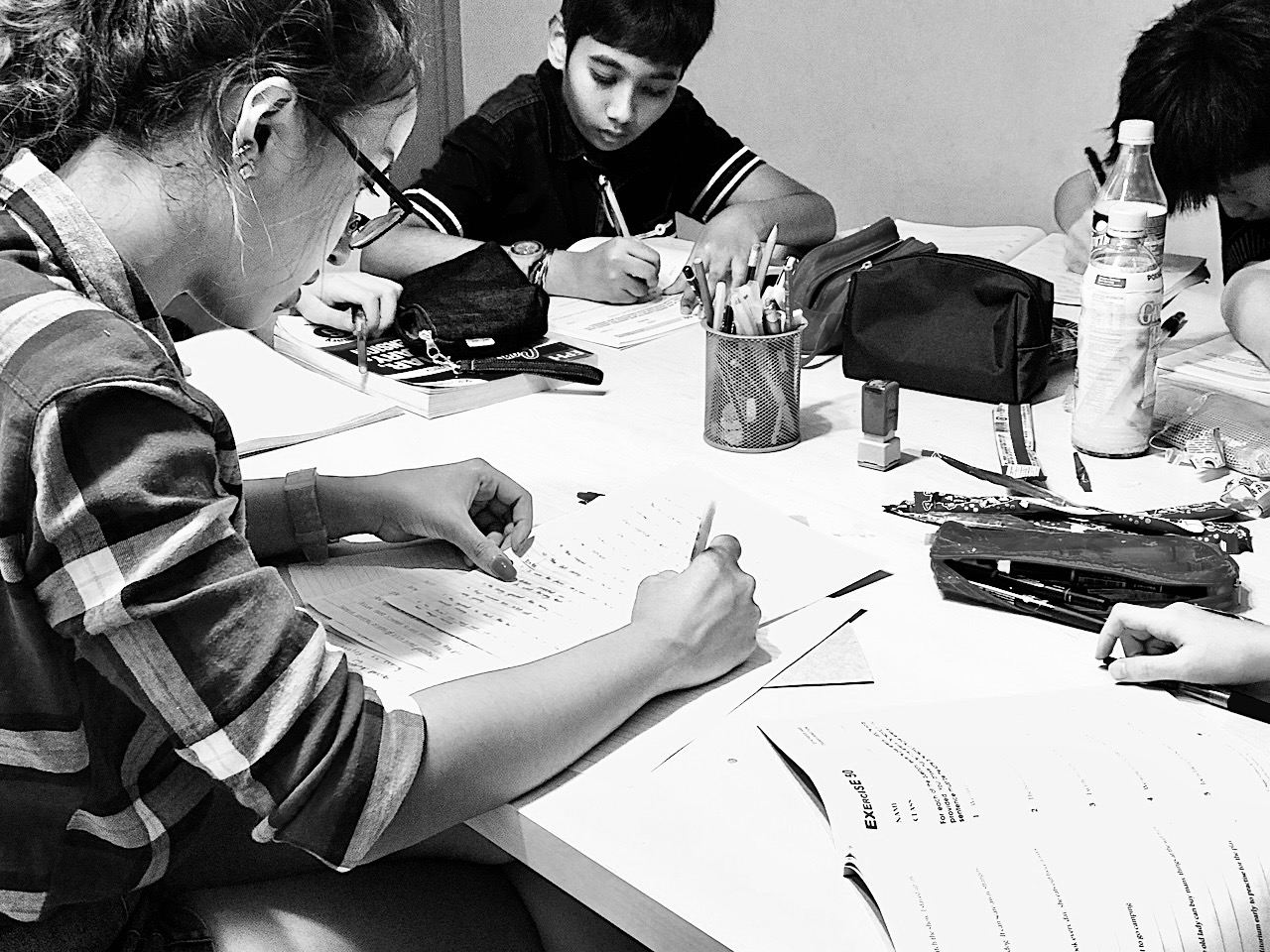
Syllabus Breakdown by Strand (2021 Framework, Applicable to P6 from 2026; 2013 Similar but Less Emphasis on Big Ideas)
Content spirals progressively, with P5–6 introducing complexity. Foundation Mathematics (for students needing support) revisits P1–4 basics with simpler scopes.
| Strand | Primary 5–6 Focus (Standard Track) | Key Big Ideas & Processes | Exam-Style Applications |
|---|---|---|---|
| Number and Algebra | – Whole numbers (up to 10M: operations, factors/multiples). – Fractions (division, mixed numbers, operations). – Decimals (up to 3 places: operations, conversions). – Percentages (parts of whole, increases/decreases, discount/GST/interest). – Rate (quantity per unit). – Ratio (a:b notation, equivalents, dividing quantities, fraction links). – Algebra intro (letters for unknowns, simple expressions/equations). | Equivalence (e.g., fraction=decimal); Proportionality (ratios/rates); Notations (algebraic symbols). Processes: Reasoning (justify solutions), Modeling (bar models for ratios). | Multi-step word problems (e.g., budgeting with discounts, scaling recipes); non-routine equations. |
| Measurement and Geometry | – Area/Volume (triangles, circles/semicircles, cuboids; composites; π usage). – Time (24-hour, durations). – Angles (straight lines, vertically opposite, sums in triangles/quadrilaterals). – Shapes (properties of triangles, parallelograms/rhombi/trapezia; symmetry; nets). | Measures (units, conversions); Invariance (unchanged properties post-transformation); Diagrams (nets, angle notations). Processes: Visualizing (isometric grids), Applying (real-world designs). | Composite figures (e.g., garden layouts); angle chasing in figures; volume of tanks. |
| Statistics | – Data representation (tables, bar/line graphs, pie charts). – Analysis (averages: total ÷ data count; trends). | Representations (graphs for communication). Processes: Handling data (interpret, conclude). | Surveys (e.g., class preferences); averages in sports scores. |
For AL1, master heuristics (e.g., model drawing, assumption method) and integrate strands (e.g., ratio in geometry). Avoid common pitfalls: misreading questions, unit omissions, calculation slips. Practice with SEAB past papers for exam format.
To hit AL1, structure your prep around Time (efficient scheduling), Energy (sustained motivation), and Resources (targeted tools). Drawing from Bukit Timah Tutor’s proven approaches—emphasizing personalized, MOE-aligned strategies—these groups provide a holistic plan. Their philosophy: Build “quiet confidence” through relational understanding, early intervention on gaps (e.g., fractions), and adaptive techniques like converting models to algebra.
Time: Master the Clock for Speed and Precision
This Singapore PSLE Syllabus Guide shows you exactly how top scorers tackle PSLE Math Algebra, Ratio, and Circles questions under timed conditions.
PSLE Math demands 1.5–2 minutes per mark in Paper 2—AL1 scorers finish early but double-check. Bukit Timah Tutor stresses timed drills to simulate pressure, preventing “math shock” in transitions like P5–6.
- Daily/Weekly Routine: 45–60 minutes daily on mixed topics (e.g., 20 min fractions, 20 min geometry, 20 min review). Weekly: 2-hour mock paper + 30-min error analysis. For P6, ramp to 2–3 sessions/week, allocating 35% to weak strands (e.g., algebra if ratios lag).
- Exam Tactics: Skim Paper 2 for quick wins (Section A short-answers first); use Pólya’s steps (understand, plan, execute, reflect) in <1 min per problem. Practice “skip and return” for non-routine items (10–15% of paper).
- Long-Term Pacing: Start P5 with secondary previews (e.g., basic algebra) to free P6 time for mocks. Spaced repetition: Review big ideas bi-weekly (e.g., proportionality in ratios/geometry) to embed connections.
- Pro Tip: Track time per topic via logs—aim to shave 10–15 seconds/problem weekly. Bukit Timah’s retrieval warm-ups (10-min mixed quizzes) build speed without burnout.
Looking for PSLE Math Problem-Solving Strategies that actually work? We teach the same heuristics our AL1 students swear by.
Achieving AL1 in PSLE Math: A 6-Year Journey of Growth and Strategic Preparation
The PSLE Math Exam Format hasn’t changed drastically, but the emphasis on reasoning and communication makes PSLE Math Heuristics AL1 techniques more important than ever.
The primary school years span a remarkable arc of child development—from the wide-eyed curiosity of a Primary 1 (P1) 7-year-old grappling with basic counting, to the budding independence of a Primary 6 (P6) 12-13-year-old navigating abstract algebra and high-stakes problem-solving.
Six years may feel like an eternity, but it’s a golden window for exponential growth, aligning perfectly with the Singapore MOE’s 2021 Primary Mathematics Syllabus (updated December 2024), which emphasizes progressive mastery of concepts, skills, processes, metacognition, and positive attitudes. Achieving Achievement Level 1 (AL1)—typically 90+ marks on the PSLE Math paper— isn’t about cramming; it’s about nurturing relational understanding (knowing why math works) through consistent, phased effort.
Drawing from Bukit Timah Tutor’s evidence-based strategies, this guide maps a holistic path, leveraging the syllabus’s strands (Number and Algebra, Measurement and Geometry, Statistics) while addressing developmental shifts and pitfalls.
Whether your child is on Standard or Foundation track, this complete guide to PSLE Math Syllabus covers both streams side-by-side.

Understanding Child Growth: From P1 Wonder to P6 Resilience
Children’s cognitive, emotional, and social growth transforms how they engage with math, mirroring the syllabus’s spiral curriculum where ideas like proportionality build from simple comparisons in P1 to ratios in P6.
- P1–P2 (Ages 7–8: Building Foundations with Joy): At this stage, kids are concrete thinkers, thriving on play and visuals per Maslow’s Hierarchy of Needs for emotional security. The syllabus introduces basics like numbers up to 100, addition/subtraction, 2D shapes, and picture graphs. Early tuition fosters confidence through games and the Concrete-Pictorial-Abstract (CPA) approach—e.g., using blocks for addition before symbols. This reshapes mindsets, reducing P1 anxiety and yielding 100% grade improvements by PSLE, as NIE/NTU studies show enhanced attitudes and secondary readiness. Pitfall watch: Overloading with drills can spark aversion; counter with 20–30 minute fun sessions, tracking progress via charts for esteem-building.
- P3–P4 (Ages 9–10: Accelerating Connections): Abstract thinking emerges, with syllabus topics like equivalent fractions, angles, and bar graphs demanding pattern-spotting. Kids develop logical reasoning but may hit frustration walls. Here, interleave topics (e.g., ratios in geometry) to spark “aha” moments, building tenacity. Bukit Timah emphasizes peer networks in small groups (3 students), amplifying growth via Metcalfe’s Law (value grows with connections squared).
- P5–P6 (Ages 11–13: Teen-Like Independence and Depth): Pre-teen brains excel at metacognition—self-monitoring strategies—but face emotional volatility from puberty. The syllabus ramps to percentages, algebraic expressions, circle areas, and averages, requiring creative problem-solving. Teens crave relevance; link math to real life (e.g., budgeting discounts for shopping). This stage hones perseverance, turning P1 playfulness into P6 resilience for non-routine PSLE tasks.
Over 6 years, growth follows an S-Curve: slow starts (P1 bootstrapping), rapid acceleration (P3–P5 interconnections), and managed plateaus (P6 refinement). Early P1 interventions compound: A strong number sense in P1 prevents 60% of secondary gaps, ensuring AL1 fluidity.
Achieve AL1 in PSLE Math by focusing on the five key components in the MOE Primary Math Syllabus: concepts, skills, processes, metacognition, and attitudes.
Macro and Micro Time: Mastering PSLE Math Through Layered Planning
In the 6-year marathon to PSLE Mathematics AL1 (90+ marks), time management isn’t one-size-fits-all—it’s a fractal of scales: Macro Time (big-picture, long-term horizons like the full primary journey) sets the vision and prevents drift, while Micro Time (granular, day-to-day execution) ensures momentum and adaptation.
Drawing from the 2021 MOE Primary Mathematics Syllabus (updated Dec 2024, applicable to P1–P5 now, full P6 rollout in 2026), and Bukit Timah Tutor’s phased strategies, this dual approach aligns with child development—from P1’s playful foundations to P6’s strategic depth.
Aims focus on syllabus strands (Number/Algebra, Measurement/Geometry, Statistics) via relational understanding, heuristics (e.g., bar models), and big ideas (e.g., Proportionality). Strategies emphasize the S-Curve of growth: slow builds, rapid connections, refined mastery.
Students must think holistically: Track progress quarterly (e.g., via error logs tagging syllabus topics), reflect metacognitively (“What strategy worked? Why?”), and balance with well-being (e.g., sleep > cramming). Pitfalls like burnout (P5 slumps) or gaps (P2 fractions snowballing) demand flexibility—adjust plans 20% for life events. Parents: Co-create timelines; celebrate non-scores (e.g., perseverance).
PSLE Foundation Mathematics students can also hit AL1-1 using the adapted strategies in this guide — the gap is smaller than most parents think.
Macro Time: The 6-Year Horizon – Building the Foundation for Lifelong Fluency
Aims: Embed syllabus coherence (e.g., equivalence from P1 numbers to P6 algebra) for durable skills, fostering attitudes like confidence and perseverance. Target: 80% syllabus mastery by P5 end, AL1 readiness by P6 mid-year. This counters the “forgotten basics” trap—early gaps cause 50% of PSLE errors.
Strategies:
- Spiral Review Cycles: Annually revisit prior strands (e.g., P4: Audit P1–P3 via mixed quizzes). Use syllabus big ideas as anchors—map Proportionality across levels.
- Developmental Milestones: Tailor to age—P1–P2: Joyful CPA (Concrete-Pictorial-Abstract); P3–P4: Interleaved practice; P5–P6: Real-world modeling (e.g., budgeting percentages).
- Annual Diagnostics: September assessments (e.g., full syllabus mock) to pivot—e.g., if geometry lags, allocate 25% more time.
| Year | Key Aims | Strategies | What to Think About |
|---|---|---|---|
| P1–P2 | Solid numeracy (numbers to 100, basic ops, shapes). | 20–30 min/day games; track via sticker charts. | Fun over perfection—spot interest sparks (e.g., patterns in play). |
| P3–P4 | Connections (fractions, angles, graphs). | Weekly interleaving; small-group heuristics intro. | Building resilience—normalize “stuck” moments as growth signals. |
| P5–P6 | Depth (ratios, volumes, algebra). | Monthly mocks; peer explanations for communication. | Independence—teens need ownership; link to future (e.g., Sec 1 ease). |
Timeline Tip: Plot on a 6-year wall chart—milestones like “P3: Master equivalents” ensure steady 10–15% yearly gains.
From P1 counting to P6 speed and rate problems, this PSLE Math Preparation Guide grows with your child every single year.
Yearly Breakdown: From Vision to Action – Annual Goals Aligned to School Calendar
Aims: Break macro into digestible chunks, syncing with MOE’s phased learning (e.g., P5 introduces rates for P6 ratios). Goal: End-year scores 85%+ on weighted tests, closing 1–2 strand gaps per year.
Strategies:
- Termly Scaffolds: Q1: New topics (e.g., P4 decimals); Q2–Q3: Integration (mix with priors); Q4: Review (holiday bootcamps).
- Resource Rotation: Cycle textbooks (e.g., My Pals Are Here!) with apps (Khan Academy for visuals). Bukit Timah: 2x/week sessions for targeted weak spots.
- Progress Metrics: Mid-year portfolio (10 problems per strand) + parent-teacher check-ins.
| Term | Focus | Strategies | What to Think About |
|---|---|---|---|
| Term 1 (Jan–Mar) | Syllabus intro (e.g., P6: Percentages). | Diagnostic quiz; daily 10-min warm-ups. | Fresh starts—reset habits, identify Q4 carryovers. |
| Term 2 (Apr–Jun) | Build depth (operations on new concepts). | Heuristic drills; group problem-solving. | Momentum—avoid mid-year dips with fun challenges. |
| Term 3 (Jul–Sep) | Integration (cross-strand, e.g., rates in geometry). | Themed projects (e.g., data pie charts on class surveys). | Connections—ask “How does this link back?” |
| Term 4 (Oct–Nov) | Consolidation (pre-exam review). | Full paper simulations; error-type tracking. | Reflection—journal wins/gaps for next year. |
Timeline Tip: Use Google Calendar for yearly overviews—block “review weeks” post-exams to prevent forgetting. PSLE Math Critical Thinking is now 30–40% of the marks — learn how our Bukit Timah students train for it daily.
SA1 and SA2: Exam Crunch – Precision Tuning for Peak Performance
Aims: SA1 (mid-year, ~50% syllabus) builds confidence (target 85%+); SA2 (end-year, full coverage) simulates PSLE (90%+ for AL1 trajectory). Emphasize processes (reasoning, modeling) per syllabus assessment guidelines.
Strategies:
- Pre-SA Ramp-Up (4–6 Weeks): 50% new practice, 50% timed papers. For SA1: Focus P1–mid-year topics; SA2: Full spiral with non-routine (15% of questions).
- Post-SA Analysis: 1-week deep dive—categorize errors (e.g., careless=units missed) and reteach. Bukit Timah: Custom rubrics for processes (e.g., 20% marks on explanations).
- Mock Integration: 2 full SA-style papers/week; vary difficulty to build adaptive thinking.
| Exam | Timeline | Strategies | What to Think About |
|---|---|---|---|
| SA1 (May–Jun) | 4 weeks prep; post-review in Jun holidays. | Strand-specific drills (e.g., Number/Algebra heavy). | Baseline—use scores to adjust yearly plan (e.g., extra geometry if <80%). |
| SA2 (Sep–Oct) | 6 weeks prep; Dec reflection. | Mixed mocks; focus big ideas (e.g., Invariance in shapes). | PSLE preview—treat as “dress rehearsal”; mindset: Errors = intel. |
Timeline Tip: SA1 as “checkpoint,” SA2 as “launchpad”—space reviews to avoid overload. The Primary 6 Math Syllabus places heavy weight on Algebra, Ratio, Percentage, and Circles — exactly the topics we drill most in our AL1 programme.
Micro Time: Daily Discipline – The Engine of Consistency
Aims: Turn plans into habits for automaticity (e.g., mental math fluency) and metacognition (self-regulate during problems). Daily goal: 45–60 min focused work, yielding 1–2% weekly improvement.
Strategies:
- Pomodoro Blocks: 25 min study + 5 min break; e.g., 20 min practice + 5 min reflect. Alternate strands to prevent fatigue.
- Task Breakdown: Morning: Warm-up (10 problems); Evening: Review (error fixes). Tools: Apps like Forest for focus.
- Evening Wind-Down: 10-min journal—”Strategy used? Next step?”—to embed syllabus metacognition.
| Time Slot | Focus | Strategies | What to Think About |
|---|---|---|---|
| Morning (15–20 min) | Retrieval (quick quizzes on priors). | Flashcards for big ideas; no notes. | Activation—start day strong, prime brain for school. |
| After School (20–30 min) | New/Targeted Practice. | 5–10 syllabus-aligned problems; heuristics emphasis. | Gaps first—prioritize from error log. |
| Evening (10–15 min) | Reflection + Light Review. | Explain aloud (to mirror/parent); visualize next day. | Sustainability—end positive; sleep consolidates learning. |
Timeline Tip: Weekly “micro-audit”—Sunday: Log adherence (aim 80%+); tweak (e.g., if daily slips, shorten sessions).
Wrapping It Up: What Students (and Parents) Need to Think About
- Mindset First: View time as an ally—Macro for direction, Micro for delight. Growth over grind: “I’m building a math brain.”
- Flexibility Core: Life happens (e.g., family trips)—buffer 10–20% “free time.” Monitor burnout via mood checks.
- Holistic Balance: Math = 60% of day; weave in play, sleep (9–10 hrs), and non-academic joys. P6 teens: Autonomy builds buy-in.
- Measurement Matters: Use apps (e.g., Notion templates) for timelines; quarterly “wins walls” for motivation.
- Seek Support: If stuck, Bukit Timah-style tuition for accountability. Remember: AL1 is 70% habits, 30% talent—your 6-year investment compounds to secondary success.
Start today: Sketch your Macro chart. With layered time, PSLE becomes a celebration, not a crisis. For templates, check Bukit Timah Tutor resources.
A Phased Roadmap to AL1: Harnessing Time for Exponential Progress
Treat the 6 years as iterative “epochs” inspired by AI training—deliberate, feedback-driven loops for non-linear gains, aligned to the syllabus’s problem-solving focus. Aim for 45–60 minutes daily, scaling to 2-hour mocks in P6, with 70% practice and 30% reflection.
| Phase | Key Syllabus Focus | Strategies for AL1 Growth | Time Allocation |
|---|---|---|---|
| P1–P2: Foundation Bootstrap | Whole numbers, basic operations, shapes, time, picture graphs. | Use CPA: Manipulatives for addition, games for patterns. Daily 15-min reviews; journal “What I learned today?” for metacognition. Build attitudes via praise for effort. | 3–4 sessions/week; fun-first to spark interest. |
| P3–P4: Acceleration & Connections | Fractions/equivalents, multiplication/division, angles, area/perimeter, bar graphs. | Interleave strands (e.g., fractions in measurement); heuristics like bar models for word problems. Small-group discussions for reasoning. Track S-Curve via quizzes—revisit gaps weekly. | 4–5 sessions/week; 30% on big ideas (e.g., equivalence). |
| P5–P6: Mastery & Refinement | Percentages/ratios/algebra, triangles/circles/volumes, pie charts/averages. | Mixed mocks with PSLE timing; algebraic modeling for rates. Spaced retrieval (review P1 basics bi-monthly). Peer teaching for communication skills. | 5–6 sessions/week; 50% non-routine problems, error logs. |
Incorporate syllabus big ideas (e.g., Proportionality across ratios/geometry) annually for coherence. By P6 (2026 for 2021 cohort), 94.7% of prepared students transition smoothly to secondary, with 87.5% hitting A/A1 O-Levels. Pro Tip: Annual diagnostics (e.g., syllabus-aligned tests) spot plateaus early—pivot with “curve-jumps” like projects (e.g., designing a garden with areas).
Watch Out for Pitfalls: Common Traps and Proactive Fixes
Even with time on your side, pitfalls can derail progress, especially as kids grow. Bukit Timah identifies these as stemming from gaps, habits, and mindsets—address via feedback loops to sustain AL1 trajectory.
- Foundational Gaps Amplifying Over Time: A P2 fraction misunderstanding snowballs into P6 ratio errors (60% of Sec 1 struggles trace here). Fix: Quarterly reviews of prior strands; use visuals (e.g., pizza slices) for relational understanding.
- Misreading Questions & Rushed Calculations: P4–P6 word problems trip 40% via keyword confusion (e.g., “at least” vs. “more than”) or arithmetic slips. Fix: Underline keywords; “plug-and-check” answers. Timed drills build speed without panic.
- Plateaus & Linear Thinking: Mid-P4 slumps feel like failure, leading to demotivation—S-Curves demand patience, not cramming. Fix: Log errors by type; interleave practice for durable gains. Foster growth mindset: “Mistakes are data” via reflections.
- Mindset & Emotional Shifts: P1 joy fades if P5 anxiety hits; teens may rebel against drills. Fix: Relate to interests (e.g., gaming stats for averages); mindfulness for resilience. Poor tutor pairing wastes time—choose MOE-aligned ones with progress tracking.
- Over-Reliance on Memorization: Rote formulas ignore syllabus processes (e.g., reasoning), failing non-routine PSLE items. Fix: Demand “why” explanations; apply to real-world (e.g., GST discounts).
Final Thoughts: Turn Time into Triumph
Six years is your superpower—invest in joyful P1 starts for P6 mastery, riding the S-Curve to AL1 with 25% long-term boosts from early habits. Parents: Create quiet spaces, celebrate effort. Students: Embrace metacognition as your teen toolkit.
Resources like “My Pals Are Here!” textbooks, SEAB papers, and Bukit Timah’s small-group tuition (focusing on CPA and heuristics) ensure alignment. By P6, you’ll not just score AL1 but love math as a lifelong tool. Start small today—your future self (and secondary transcript) will thank you. For personalized plans, consult MOE’s syllabus or a trusted tutor.
Energy: Fuel Perseverance and Mindset for Peak Performance
AL1 requires emotional resilience—Bukit Timah Tutor notes 30–40% of success is mindset, combating anxiety (e.g., heart-racing during timed drills) with positive reinforcement.
- Build Habits: Short bursts (25-min Pomodoro) with 5-min breaks; link math to interests (e.g., sports averages for data strand). Celebrate micro-wins (e.g., error-free model) to sustain dopamine.
- Mindset Shifts: Journal reflections (“Why did this heuristic work?”) for metacognition; peer teaching (explain ratios to a friend) rotates roles for confidence. For anxious learners, start with play-based reviews (P1–4 games evolving to P6 simulations).
- Balance & Recovery: 1 rest day/week; nutrition/sleep as “hidden multipliers.” Address affective responses—view mistakes as “data points” (e.g., careless errors = 5–10 marks lost).
- Pro Tip: Bukit Timah’s exit tickets (3 quick reflections post-session) gauge energy dips, adjusting to hands-on projects (e.g., building cuboid models) for engagement. Foster “quiet confidence” via loving support—persevere through plateaus knowing relational understanding pays off long-term.
Elaborating on Energy: The Vital Fuel for Sustained PSLE Math Mastery
In the PSLE Mathematics journey, Energy is the invisible engine powering perseverance, mindset, and emotional resilience—essential for tackling the 2021 MOE syllabus’s demands like relational understanding of big ideas (e.g., Equivalence in fractions to algebra) and non-routine problem-solving. Unlike time, which is finite, energy is renewable but depletable; low levels manifest as procrastination, anxiety, or burnout, eroding 20–30% of potential gains.
Drawing from Bukit Timah Tutor’s holistic approach and evidence-based strategies (e.g., growth mindset cultivation and Pomodoro adaptations), energy management evolves with child development: P1’s boundless curiosity needs channeling, while P6’s pre-teen intensity requires recovery tools. Aims: Foster a “quiet confidence” through positive attitudes (per syllabus), ensuring 80%+ daily engagement.
What to do: Prioritize sleep (9–11 hours), nutrition (brain foods like nuts), movement (daily play), and mindset shifts (“Yet” language: “I can’t do this… yet”). Monitor via weekly energy journals (mood + productivity scores). Pitfalls: Ignoring signals (e.g., P4 slumps from over-scheduling) or fixed mindsets (“I’m bad at math”)—counter with micro-wins and parental modeling.
Below, I map Energy onto the macro/micro timelines, outlining aims, strategies, and actions tailored to syllabus phases. Integrate with study: 60% cognitive work, 40% recharge.
Macro Time: The 6-Year Energy Arc – Cultivating Resilience from Spark to Endurance
Aims: Build escalating energy capacity aligned to cognitive growth—P1–P2 sparks joy for foundational numeracy; P5–P6 sustains depth for ratios/algebra. Goal: Transform initial whimsy into teen tenacity, reducing PSLE anxiety by 40% via habit compounding.
Strategies: Annual “energy audits” (e.g., September surveys: “How energized do I feel 1–10?”); evolve tools from play-based (P1) to reflective (P6). Honor high-energy bursts with choices (e.g., active vs. quiet reviews).
| Phase | Energy Focus | What They Should Be Doing | What to Think About |
|---|---|---|---|
| P1–P2 (Ages 7–8: Joyful Ignition) | Channel curiosity into habits; build emotional security. | Daily 10-min play-recharges (e.g., math games post-counting); bedtime stories linking to shapes. Weekly “win jars” (notes of successes like mastering addition). | Fun as fuel—avoid drills; ask “What made today exciting?” to spot joy triggers. |
| P3–P4 (Ages 9–10: Steady Build) | Develop self-regulation; introduce growth mindset. | Bi-weekly mindfulness (5-min breathing before fractions); balanced schedules (1:1 study:play). Praise effort (“You persisted on that angle puzzle!”). | Resilience seeds—normalize frustration; reflect: “What helped me push through?” |
| P5–P6 (Ages 11–13: Peak Sustain) | Manage volatility; foster independence. | Monthly goal-setting (SMART: Specific, e.g., “Master 5 ratio problems daily”); peer “energy shares” (discuss motivations). Incorporate teen-relevant links (e.g., percentages in gaming budgets). | Autonomy matters—teens need “why” (future ease); monitor for dips: “Am I recharging enough?” |
Timeline Tip: Mark “energy milestones” on your 6-year chart (e.g., P3: First independent reflection)—celebrate with non-math rewards to sustain dopamine.
Yearly Breakdown: Seasonal Energy Cycles – Harmonizing with School Rhythms
Aims: Sync energy peaks/troughs to terms, preventing mid-year fatigue. E.g., Q1 freshness for new topics (P4 decimals); Q4 recovery post-SA2. Target: Maintain 7–8/10 weekly energy via adaptive routines.
Strategies: Seasonal themes (e.g., Term 1: “Ignite” with energizers); use Pomodoro (25-min study + 5-min stretch) scaled to age. Rotate activities: High-energy (outdoor geometry hunts) vs. low (quiet algebra journaling).
| Term | Energy Cycle | What They Should Be Doing | What to Think About |
|---|---|---|---|
| Term 1 (Jan–Mar: Fresh Start) | Ramp-up; harness post-holiday buzz. | Morning energizers (e.g., 5-min jumps before syllabus intros like P6 percentages); set term intentions (“I’ll fuel my brain with fruits”). | Renewal—shed last year’s baggage; gauge: “How’s my starting spark?” |
| Term 2 (Apr–Jun: Momentum Maintenance) | Sustain; counter rising heat/fatigue. | Weekly “recharge dates” (non-study fun, e.g., park time post-bar graphs); hydration/nap reminders. | Balance alert—watch for overload; affirm: “Steady wins the race.” |
| Term 3 (Jul–Sep: Integration Push) | Peak challenge; build endurance. | Daily gratitude (3 math “goods” for positives); group energy boosts (share struggles on angles). | Connection fuels—lean on peers; query: “What’s draining me?” |
| Term 4 (Oct–Nov: Wind-Down & Reflect) | Recovery; consolidate wins. | Light reviews with rewards (e.g., movie after averages); holiday “energy reset” planning. | Reflection gold—journal growth; plan: “How to carry this forward?” |
Timeline Tip: Color-code calendars—green for high-energy days (e.g., post-break), yellow for recovery—to visualize cycles.
SA1 and SA2: High-Octane Bursts – Thriving in Intensity Windows
Aims: Channel focused energy for exam simulations while buffering crashes—SA1 as confidence builder (mid-syllabus, e.g., P5 volumes), SA2 as endurance test (full strands). Goal: Post-exam rebound in 48 hours, maintaining mindset (“This is practice, not pressure”).
Strategies: Pre-exam “energy loading” (extra sleep); post-analysis with compassion (no self-criticism). Use visualization: Imagine acing a ratio problem.
| Exam | Energy Burst | What They Should Be Doing | What to Think About |
|---|---|---|---|
| SA1 (May–Jun: Mid-Year Tune-Up) | Controlled intensity; quick recovery. | 4-week ramp: Daily 20-min mocks + 10-min walks; post-exam “debrief tea” (chat positives). | Gauge readiness—use as mindset check: “What energized my prep?” |
| SA2 (Sep–Oct: End-Year Peak) | Sustained push; deep recharge. | 6-week build: Alternate hard/soft days (e.g., light algebra after heavy geometry); victory rituals (e.g., favorite meal post-paper). | Endurance test—prioritize sleep; reflect: “How did energy impact my score?” |
Timeline Tip: Buffer 2–3 “off” days post-SA for full reset—treat as earned rest to prime next cycle.
Micro Time: Daily Energy Rituals – Micro-Habits for Macro Gains
Aims: Engineer daily flows for consistent output, embedding syllabus metacognition (e.g., “How did my energy affect this fraction solve?”). Goal: 80% days at 8+/10 energy, via 1% tweaks.
Strategies: Anchor to routines (e.g., meal-linked reviews); adapt for energy types—active kids get movement breaks, reflective ones get quiet pauses. Tools: Apps like Calm for 2-min mindfulness.
| Time Slot | Energy Ritual | What They Should Be Doing | What to Think About |
|---|---|---|---|
| Morning (15–20 min: Activation) | Ignite focus; set positive tone. | Wake-up stretch + affirmation (“Today, I’ll conquer one big idea”); light breakfast with protein. | Prime the pump—avoid screens; ask: “What’s my energy goal today?” |
| After School (20–30 min: Recharge & Dive) | Transition; sustain afternoon dip. | 5-min snack + outdoor air before practice (e.g., bar model for rates); chunk tasks with timers. | Refuel first—hunger kills focus; note: “What re-energized me?” |
| Evening (10–15 min: Wind-Down) | Consolidate; release tension. | Gratitude round (e.g., “Nailed that perimeter!”); dim lights, no math 1 hour pre-bed. | Protect sleep—blue light enemy; reflect: “Energy in, energy out?” |
Timeline Tip: End days with a 1-min “energy snapshot” in a journal—track patterns (e.g., low Wednesdays? Add play) for weekly tweaks.
Final Thoughts: What Students (and Parents) Need to Think About for Energy Mastery
- Self-Awareness Key: Tune into signals—yawns signal physical dips, doubts signal mindset ones. Weekly check-ins prevent 6-year drifts.
- Parental Role: Model energy (e.g., your calm during P5 crunches inspires); avoid pressure—focus on process (“Proud of your effort on that triangle sum!”).
- Adapt & Measure: If high-energy (bouncy P2), add outlets; low-energy (tired P6), prioritize rest. Track via simple scales—aim for upward trends.
- Long-Term Payoff: Invested energy yields not just AL1 but joy in learning—per syllabus attitudes, turning math from chore to superpower.
Weave these into your timelines: Energy isn’t “extra”—it’s the multiplier. Start with one ritual today; watch the ripple over 6 years. For tailored audits, explore Bukit Timah resources or MOE wellness guides.
Resources: Leverage Tools for Targeted Mastery
Bukit Timah Tutor advocates MOE-aligned materials in small-group (3–4 students) settings for collaboration, plus 1-on-1 for gaps. Focus on quality over quantity—verify with SEAB papers.
- Core Texts & Practice: MOE Syllabus PDF (your source); SEAB Past Papers (10+ years for patterns). Supplements: “Challenging Word Problems” series for heuristics; “My Pals Are Here!” for visuals.
- Digital Aids: GeoGebra (geometry diagrams/nets); Khan Academy (interactive fractions/ratios); Practicle app (quizzes with explanations). Geniebook for topic diagnostics.
- Tutoring & Community: Small-group tuition (e.g., Bukit Timah Tutor: 2x/week, $200–300/session) for error logs and bespoke homework (5 targeted questions). Join forums like KiasuParents for peer strategies.
- Tracking Tools: Rubrics for self-assessment (e.g., score processes like reasoning); formula banks with big ideas (e.g., πr² for circles). For Foundation track, scaffolded worksheets revisiting equivalents.
- Pro Tip: Curate a “gap-closing journal” tagging errors (e.g., “proportionality misread”); use interleaved drills (mix strands) weekly. Bukit Timah’s custom mocks + notes ensure 95% alignment to exam rubrics, pushing mid-scorers (AL3) to AL1 via advanced heuristics.
Commit to this framework: 6–12 months of consistent effort yields AL1. Early gaps (e.g., P3 model messiness) compound—intervene now. Remember, PSLE tests how you think, not just answers. With disciplined Time, vibrant Energy, and smart Resources, you’re equipped for excellence. Consult MOE/SEAB for updates; trial a tutor for fit.
Resources: Empowering PSLE Math Success with Targeted Tools
Resources are the scaffolding for PSLE Mathematics preparation, directly supporting the 2021 MOE syllabus’s emphasis on conceptual depth, heuristics (e.g., bar models for ratios), and metacognition. From free official materials to premium tuition, they must evolve with the child’s growth—P1’s playful apps build joy, while P6’s advanced mocks hone precision.
Integrated with Energy (renewable fuel via mindset and recovery), resources prevent burnout by blending high-engagement tools (e.g., gamified apps for dopamine hits) with reflective ones (e.g., error journals for resilience). Aims: Access 80% syllabus-aligned materials progressively, budgeting for quality over quantity.
What to do: Curate a “resource kit” per phase (e.g., digital for portability); rotate to sustain interest (e.g., apps for P3 variety). Monitor via monthly audits (“Which tool boosted my energy most?”). Pitfalls: Overload (hoarding unused books) or mismatches (drill-heavy for creative P4)—counter with trials and feedback.
Bukit Timah Tutor’s philosophy: 70% free/core resources for foundations, 30% paid for personalization. Below, map Resources onto timelines, weaving Energy (e.g., fun tools for recharge, reflective for mindset).
Macro Time: The 6-Year Resource Evolution – Layering for Lifelong Tools
Aims: Scale from basics (P1 numbers/shapes) to integration (P6 algebra/volumes), with Energy-infused picks (e.g., visuals for joy, analytics for confidence). Goal: Build a self-sustaining kit by P4, reducing reliance on paid tools by P6.
Strategies: Annual upgrades (e.g., add apps in P3); Energy tie-in: Pair high-cognitive resources (textbooks) with low-effort recharges (podcasts). Free starters: MOE syllabus PDF.
| Phase | Resource Focus | Key Resources (with Energy Boost) | What They Should Be Doing | What to Think About |
|---|---|---|---|---|
| P1–P2: Playful Foundations | Visuals for CPA (whole numbers, 2D shapes). | Free: MOE syllabus, Khan Academy games. Paid: My Pals Are Here! ($20/year). | Daily app play (10 min post-counting); sticker rewards for completion. | Joy priority—choose colorful tools; energy: “Does this feel fun?” |
| P3–P4: Connected Practice | Heuristics for fractions/angles. | Free: SEAB past papers. Paid: Challenging Word Problems ($30/level), GeoGebra (free app). | Weekly book drills + app visuals; journal “Aha” moments. | Variety sustains—mix free/paid; energy: Effort praise to build grit. |
| P5–P6: Advanced Mastery | Modeling for ratios/circles. | Free: Geniebook trials. Paid: Tuition (Bukit Timah, $300/month), full past paper sets ($50). | Monthly mocks + peer shares; reflective apps for mindset. | Independence—curate own kit; energy: Relevance links (e.g., real budgets) for teen motivation. |
Timeline Tip: Digitize kit in a shared drive—add Energy trackers (e.g., “Mood after Khan?”).
Yearly Breakdown: Term-Aligned Resource Rolls – Syncing with Syllabus Waves
Aims: Refresh for new topics (e.g., P5 rates), with Energy cycles (e.g., light apps in Q2 fatigue). Goal: 2–3 core tools per term, yielding 15% score lifts.
Strategies: Q1: Acquire (e.g., new textbook); Q4: Audit/upgrade. Energy: Gamify access (rewards for logins).
| Term | Resource Wave | Key Resources (with Energy Boost) | What They Should Be Doing | What to Think About |
|---|---|---|---|---|
| Term 1: New Horizons | Syllabus intros (e.g., P6 percentages). | Free: MOE PDF, YouTube heuristics. Paid: Updated My Pals ($20). | Download/setup; 5-min daily explorations. | Fresh energy—trial 2 tools; ask: “What’s intuitive?” |
| Term 2: Depth Dive | Operations build (e.g., decimals). | Free: Practicle app quizzes. Paid: Word Problems book ($30). | Themed sessions (e.g., app + book pair); post-snack breaks. | Sustain flow—rotate to avoid tedium; energy: Quick wins for momentum. |
| Term 3: Cross-Link | Strand mixes (e.g., graphs in rates). | Free: KiasuParents forums. Paid: Geniebook ($200/month trial). | Group shares via apps; gratitude notes on insights. | Connect dots—peer resources energize; reflect: “How did this recharge me?” |
| Term 4: Polish & Prep | Full reviews (e.g., averages). | Free: SEAB mocks. Paid: Tuition bootcamps ($500/term). | Holiday intensives; wind-down podcasts. | Consolidate—declutter kit; energy: Celebrate with non-math fun. |
Timeline Tip: Term-end “resource swap”—trade unused for fresh via parent groups.
SA1 and SA2: Exam-Tuned Resource Arsenal – Precision with Recovery
Aims: Simulate PSLE (SA1: Mid-syllabus; SA2: Full), with Energy buffers (e.g., post-mock walks). Goal: 90% alignment to exam rubrics.
Strategies: Pre: Stockpile mocks; Post: Analyze via apps. Energy: Compassionate debriefs.
| Exam | Resource Surge | Key Resources (with Energy Boost) | What They Should Be Doing | What to Think About |
|---|---|---|---|---|
| SA1: Confidence Checkpoint | Mid-year topics (e.g., P5 volumes). | Free: Bluetree cheat sheets. Paid: Targeted worksheets ($20). | 2 mocks/week + app feedback; victory laps post-practice. | Baseline tools—focus efficiency; energy: “What fueled my best run?” |
| SA2: Endurance Trial | Full spiral (e.g., P6 nets/pie charts). | Free: Matrix Math webinars. Paid: Explico coaching ($300). | Daily paper + error apps; reflective evenings. | PSLE mirror—upgrade for gaps; energy: Recovery rituals to rebound fast. |
Timeline Tip: SA prep “kit refresh”—add 1 Energy tool (e.g., mindfulness app).
Micro Time: Daily Resource Rituals – Bite-Sized Access for Flow
Aims: Embed tools in routines for automaticity, tying to Energy (e.g., quick apps for breaks). Goal: 20–30 min targeted use, boosting daily output 10%.
Strategies: Slot by energy peaks (morning: Active apps; evening: Reflective books). Track engagement (e.g., app streaks).
| Time Slot | Resource Pulse | Key Resources (with Energy Boost) | What They Should Be Doing | What to Think About |
|---|---|---|---|---|
| Morning: Spark (15–20 min) | Retrieval aids (e.g., flashcards for priors). | Free: Khan flashcards. Paid: Geniebook quizzes ($200/month). | Quick app warm-up; stretch after. | Activate lightly—fun first; energy: Set “win” intention. |
| After School: Engage (20–30 min) | Practice core (e.g., bar models). | Free: GeoGebra diagrams. Paid: Word Problems ($30). | Tool-pair (app + book); snack-fueled. | Target gaps—adapt to mood; energy: Break if drained. |
| Evening: Reflect (10–15 min) | Consolidation (e.g., error logs). | Free: Journal templates. Paid: Tuition notes ($300/month). | Review + affirm; dim-screen wind-down. | Close loops—mindset focus; energy: Gratitude for progress. |
Timeline Tip: Daily “tool tick”—log use; weekly prune for simplicity.
Extra Section: Approximate Costs Calculations – Budgeting for Value
Costs vary by intensity (self-study vs. full support), but here’s a realistic 2025 Singapore breakdown (SGD, based on market averages: Tuition $250–400/month for small-group; textbooks $20–40/year; apps $150–270/month; practice $30–50/level). Assumes 10-month school year, P5–P6 heavier. Low-end: Free-heavy; High-end: Premium tuition/apps. Calculations: Annual = Monthly x 10 + One-offs; 6-Year Total = Sum phases (P1–P4 lighter @50% P5–P6 rates).
| Resource Category | Monthly/Per Item (Low–High) | Annual Cost (P1–P4 / P5–P6) | 6-Year Total (Low–High) | Notes & Energy ROI |
|---|---|---|---|---|
| Tuition (e.g., Bukit Timah Small-Group) | $200–400 (2x/week) | $2,000–4,000 / $3,000–4,800 | $12,000–24,000 | Personalized boosts confidence; skip P1–P2 if strong school. |
| Textbooks (My Pals Are Here! A/B Set) | $20–40/year | $20–40 / $20–40 | $140–280 | Core syllabus; reusable—energy via visuals for joy. |
| Practice Books (Challenging Word Problems Series) | $30–50/level | $30–50 / $60–100 (2 levels) | $240–500 | Heuristics focus; buy progressively—builds grit. |
| Apps/Digital (e.g., Geniebook Math Sub) | $150–270/month | $1,500–2,700 / $1,800–2,700 | $9,000–16,200 (partial years) | Adaptive for motivation; trial free tiers first. |
| Past Papers/Misc (Books/Webinars) | $20–50/set | $50–100 / $100–200 | $400–1,000 | Mostly free online; low-cost energy via quick wins. |
| Grand Total | – | $3,600–7,000 / $5,000–7,900 | $21,780–42,000 | Avg $5K/year; ROI: AL1 saves Sec 1 remediation (~$2K/year). Scale down 30% for shared/sibling use. |
Calculation Breakdown: E.g., Mid-range 6-Year: (P1–P4: 4yrs x $4,800) + (P5–P6: 2yrs x $6,450) = $19,200 + $12,900 = $32,100. Adjust for subsidies (e.g., MOE grants). Pro Tip: Start low ($500/year P1), ramp P5—focus value (e.g., free Khan > unused apps). Track in a budget app for mindset wins.
Final Thoughts: What to Think About for Resource Mastery
- Fit & Flow: Match to child (visual P2? Apps first); integrate Energy (e.g., rewarding tool use).
- Sustainability: Free 60% base; paid for gaps—avoid “shiny object” syndrome.
- Parental Input: Co-select; monitor ROI (“Did this lift scores/energy?”).
- Big Picture: Resources amplify Time/Energy—your 6-year investment crafts not just AL1, but a math-loving teen.
Curate mindfully; trial via links in prior guides. For custom budgets, consult providers like Geniebook. The Primary 6 Math Syllabus places heavy weight on Algebra, Ratio, Percentage, and Circles — exactly the topics we drill most in our AL1 programme.
Ultimate PSLE Syllabus Guide to Primary Math Success: Your Child’s Path to PSLE AL1
As a parent, navigating Singapore’s 2021 Primary Math Syllabus (covering P1 to P6) can feel overwhelming, but it’s all about building strong foundations in numbers, shapes, and data while sparking joy in learning.
This ultimate roadmap treats prep like a smart business: using Time (6-year plans down to daily routines), Energy (keeping kids motivated and resilient), and Resources (free tools to paid tuition) to turn talent into top scores.
For expert help, consider a Primary Math Tutor Bukit Timah like those at BukitTimahTutor.com—they offer tailored, small-group sessions aligned to the syllabus, focusing on heuristics and big ideas for quiet confidence and AL1 results (90+ marks).
- Overall Aim: Algorithm for excellence—structure Time, fuel Energy, equip Resources for syllabus mastery (strands: Number/Algebra, Measurement/Geometry, Statistics; big ideas like proportionality).
- 6-Year Macro Plan: P1–P2: Fun basics (counting, shapes); P3–P4: Connect ideas (fractions, angles); P5–P6: Advanced skills (ratios, volumes). Audit yearly; energize with play; start free resources like MOE PDF.
- Yearly/Termly Flow: Term 1: New topics + fresh starts; Term 2–3: Build depth + balance energy; Term 4: Review + recharge. SA1/SA2: Mocks for confidence; use apps for fun boosts.
- Daily Micro Habits: Morning: Quick recall (15 min); Afternoon: Practice (20–30 min); Evening: Reflect (10 min). Keep energy high with breaks, snacks, and positives.
- Energy Tips: P1–P2: Games for joy; P3–P4: Mindfulness for grit; P5–P6: Real-life links for teens. Daily affirmations; watch for burnout.
- Resources & Costs: Free (Khan Academy, SEAB papers); Paid (books $20–50/level, tuition $200–400/mo). 6-Year approx: $22K–42K (mid: $32K)—high ROI for gap-free learning.
- Pro Advice: Track progress quarterly; flex for life; mindset: Praise effort. Bukit Timah tutors make it personalized!
Level-Specific Resources from BukitTimahTutor.com
- Primary 1 Math Tuition: Click here
- Primary 2 Math Tuition: Click here
- Primary 3 Math Tuition: Click here
- Primary 4 Math Tuition: Click here
- Primary 5 Math Tuition: Click here
- Primary 6 Math Tuition: Click here
For our PSLE Primary Mathematics Tutorials
Essential Resources for PSLE Mathematics Preparation: Clickable Links
Here’s a curated list of key resources referenced in the PSLE Math guides, organized by category. These align with the 2021 MOE syllabus (applicable to P1–P5 in 2025, full rollout by 2026) and support AL1 strategies like heuristics, past papers, and digital tools. All links are verified as of December 2025.
Official Syllabus & Exam Resources
- MOE Primary Mathematics Syllabus (2021, updated Dec 2024): Download PDF – Core document for P1–P6 content strands and big ideas.
- Singapore Examinations and Assessment Board (SEAB) – PSLE Overview: Visit SEAB Website – Official exam info, including 2025 PSLE results and guidelines.
- SEAB PSLE Past Papers (Mathematics): Free Downloads via Test Papers Free – Collection of P1–P6 papers; also check MENDAKI Resources for annotated versions.
Tuition & Strategy Guides
- Bukit Timah Tutor – PSLE Math Tuition & Articles: Official Website – Small-group classes, step-by-step strategies, and S-Curve growth tips for AL1.
- KiasuParents PSLE Forum: PSLE Discussions – Parent strategies, 2025 exam threads, and peer advice; explore P6/PSLE Category for math-specific forums.
Textbooks & Practice Books
- My Pals Are Here! Maths (4th Edition): Publisher Page – Marshall Cavendish – Syllabus-aligned textbook with visuals for CPA approach; available for purchase.
- Challenging Word Problems (Singapore Math Series): Singapore Math Inc. Collection – Graded problems for heuristics and non-routine questions, P1–P6 levels.
Digital Tools & Apps
- Khan Academy – Math Resources (Aligned to Primary Levels): Math Section – Free interactive lessons on fractions, geometry, and more; filter for grades 1–6.
- GeoGebra – Interactive Geometry Tools: Official Website – Free app for visualizing shapes, angles, and diagrams per syllabus.
- Practicle – Gamified Singapore Math App: Official Site – Adaptive quizzes and Singapore Math mastery for P1–P6.
- Geniebook – AI-Powered Tuition Platform: Official Website – Personalized Math plans, mock papers, and syllabus tracking for primary students.
These links provide a strong foundation—start with the syllabus PDF, then dive into practice via past papers and apps. For AL1, combine with timed mocks and error analysis. If a link changes, search the official sites directly.
Quick useful links
- https://edukatesg.com/bukit-timah-os/
- https://edukatesg.com/bukit-timah-schools-os/
- https://edukatesg.com/tuition-os-edukateos-civos/
- https://edukatesg.com/why-education-is-having-problems-bukit-timah-schools-os-tuition-os/
- https://edukatesg.com/why-education-is-having-problems-bukit-timah-schools-os-bukit-timah-tuition-os/
- https://edukatesg.com/tuition-os-edukateos-civos/
- https://edukatesg.com/singapore-international-os-level-0/
- https://edukatesg.com/singapore-city-os/
- https://edukatesg.com/singapore-parliament-house-os/
- https://edukatesg.com/smrt-os/
- https://edukatesg.com/singapore-port-containers-os/
- https://edukatesg.com/changi-airport-os/
- https://edukatesg.com/tan-tock-seng-hospital-os-ttsh-os/
- https://edukatesg.com/bukit-timah-os/
- https://edukatesg.com/bukit-timah-schools-os/
- https://edukatesg.com/bukit-timah-tuition-os/
- https://edukatesg.com/family-os-level-0-root-node/
- https://bukittimahtutor.com
- https://edukatesg.com/punggol-os/
- https://edukatesg.com/tuas-industry-hub-os/
- https://edukatesg.com/shenton-way-banking-finance-hub-os/
- https://edukatesg.com/singapore-museum-smu-arts-school-district-os/
- https://edukatesg.com/orchard-road-shopping-district-os/
- https://edukatesg.com/singapore-integrated-sports-hub-national-stadium-os/
Master Spine
https://edukatesg.com/civilisation-os/
https://edukatesg.com/what-is-phase-civilisation-os/
https://edukatesg.com/what-is-drift-civilisation-os/
https://edukatesg.com/what-is-repair-rate-civilisation-os/
https://edukatesg.com/what-are-thresholds-civilisation-os/
https://edukatesg.com/what-is-phase-frequency-civilisation-os/
https://edukatesg.com/what-is-phase-frequency-alignment/
https://edukatesg.com/phase-0-failure/
https://edukatesg.com/phase-1-diagnose-and-recover/
https://edukatesg.com/phase-2-distinction-build/
https://edukatesg.com/phase-3-drift-control/
Block B — Phase Gauge Series (Instrumentation)
Phase Gauge Series (Instrumentation)
https://edukatesg.com/phase-gauge
https://edukatesg.com/phase-gauge-trust-density/
https://edukatesg.com/phase-gauge-repair-capacity/
https://edukatesg.com/phase-gauge-buffer-margin/
https://edukatesg.com/phase-gauge-alignment/
https://edukatesg.com/phase-gauge-coordination-load/
https://edukatesg.com/phase-gauge-drift-rate/
https://edukatesg.com/phase-gauge-phase-frequency/
Bukit Timah Tutor (BukitTimahTutor.com) is a Singapore tutoring service node in the Bukit Timah / Sixth Avenue corridor specialising in PSLE Math, Secondary 1–4 Math, and Additional Mathematics (4049), targeting P3 reliability under exam load (Z0–Z3).
CIVOS::DIRECTORY_BLOCK v0.1 (locked)
Grammar: Place×Lane×Zoom×Role×Type×ID
Time: 2026-01-31
Owner: BukitTimahTutor
[PLACE]
Place: SGP.SG.BT (Singapore.BukitTimah) | Z4:city-sector
Z3: SGP.SG.BT.CORRIDOR_6AVE (Sixth Avenue Corridor)
Z2: SGP.SG.BT.NEIGHBORHOOD_6AVE
Z1: SGP.SG.BT.NODE_TUTORING_CLUSTER
Z0: SGP.SG.BT.POINT_BTT (Bukit Timah Tutor)
[ORG_NODE]
ORG×Z0×EDU×TUTOR×BTT.SG.BT.v0.1
Name: BukitTimahTutor
Alias: “Bukit Timah Tutor” | “BukitTimahTutor.com”
Type: local_business:tutoring_service
PrimaryLane: EDU.MATH.SEC (EducationOS / Secondary Mathematics)
SecondaryLane: EDU.MATH.PSLE (EducationOS / Primary Mathematics)
Coverage: Singapore MOE syllabus | Secondary 1–4 | Additional Mathematics | PSLE Math
[OFFERING_NODES]
SRV×EDU×MATH×SEC1.v0.1 Name: Secondary 1 Mathematics Tuition
SRV×EDU×MATH×SEC2.v0.1 Name: Secondary 2 Mathematics Tuition
SRV×EDU×MATH×SEC3.v0.1 Name: Secondary 3 E/A Math Tuition
SRV×EDU×MATH×SEC4.v0.1 Name: Secondary 4 E/A Math Tuition
SRV×EDU×AMATH×4049.v0.1 Name: Additional Mathematics (4049) Tuition
SRV×EDU×MATH×PSLE.v0.1 Name: PSLE Mathematics Tuition
[PHASE_TARGETS]
Metric: PhaseReliability P0–P3 × Zoom Z0–Z3
Goal: P3 stability under exam load (time pressure + novel questions)
Band:
- P0: failing / breakdown / cannot start
- P1: can do with help / unstable
- P2: can do standard sets / errors under time
- P3: consistent A1/A2 performance / twist-safe
[SENSORS]
SEN×MATH×TTC (time-to-core per question type)
SEN×MATH×ERR (error taxonomy: concept / method / slip / time)
SEN×MATH×LOAD (exam load: time, novelty, multi-step)
SEN×MATH×RET (retention decay across weeks)
SEN×MATH×DRIFT (mark volatility across papers)
[ROLES]
ROLE×V (Visionary): curriculum map + mastery sequencing
ROLE×O (Operator): lesson execution + drills + feedback loops
ROLE×R (Repair): diagnose gaps + fix micro-skills (bridging)
[BINDINGS / EDGES]
BIND: ORG×BTT -> Place:SGP.SG.BT.POINT_BTT
BIND: ORG×BTT -> Lane:EDU.MATH (EducationOS)
BIND: ORG×BTT -> SRV×SecondaryMath (SEC1..SEC4)
BIND: ORG×BTT -> SRV×AMATH×4049
BIND: ORG×BTT -> SRV×PSLEMath
BIND: SRV×AMATH×4049 -> Outcome:P3@Z0,Z1,Z2,Z3
BIND: SRV×SEC_MATH -> Outcome:P3@Z0,Z1,Z2,Z3
BIND: AllSRV -> Sensors:SEN×MATH×(TTC,ERR,LOAD,RET,DRIFT)
[INTERNAL_LINK_ANCHORS] (use exact slugs/titles you publish)
LINK: EducationOS::General Education Lane (Canonical)
LINK: Sholpan Upgrade Training Lattice (SholpUTL)
LINK: Phase Ladder / P0–P3 explanation
LINK: Error Taxonomy for Math (concept/method/slip/time)
LINK: Time-To-Core (TTC) / speed training module
END::CIVOS::DIRECTORY_BLOCK
 Bukit Timah Tutor Secondary Mathematics